
8414 Sabal Industrial Blvd, Tampa, FL 33619
Hurricane Strong. STH Strong
Mon – Fri 8:00AM – 5:00OM / Sat-Sun – Closed
June 8, 2026 · Reading time: ~12 min
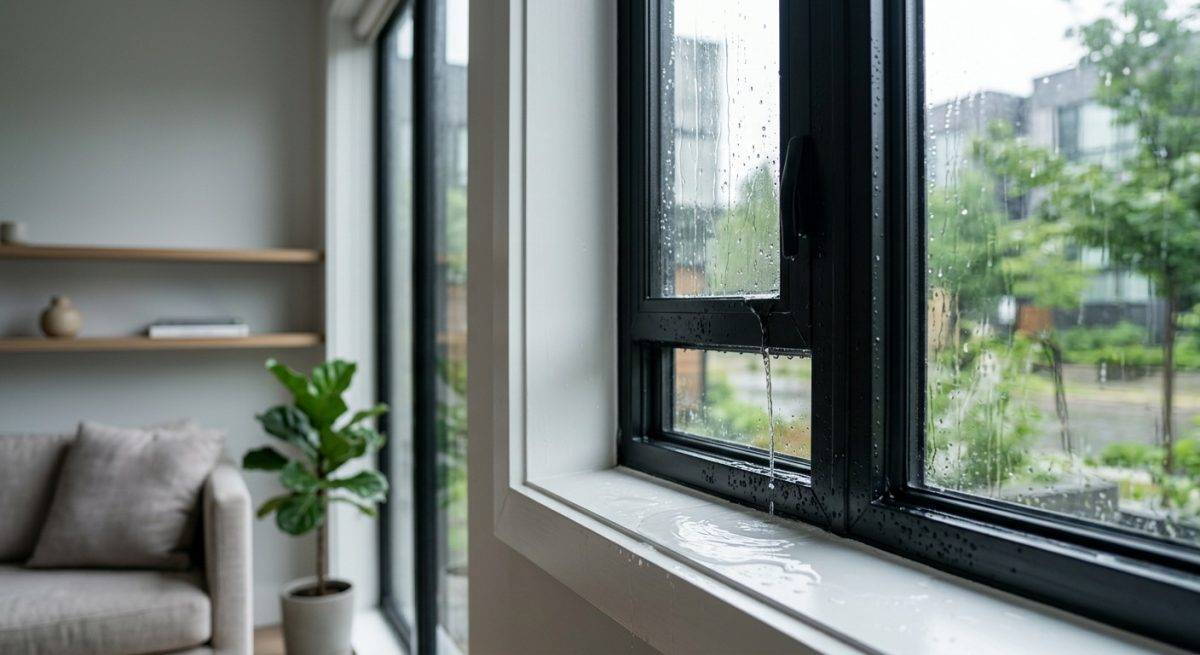
Preventing costly repairs and damage from a leaking window boils down to a few core principles. Don’t let minor issues become major disasters.
When in doubt, call an expert. Trying to DIY complex repairs or misdiagnosing the problem will almost always cost you more in the long run. A professional assessment is an investment in preventing greater expense.
And finally, quality installation prevents future leaks. Whether you’re repairing seals or replacing a whole window, ensuring it’s done right, with the right materials for Tampa’s climate, is the most effective way to avoid future headaches.
A well-installed window is a silent protector.
FAQ
A leaking window isn’t just an annoyance; it’s a silent threat to your home’s integrity and your wallet. In 2026, we’re seeing more homeowners than ever realizing that ignoring water intrusion, even small drips, can escalate into major headaches. This guide is for Tampa homeowners who want to protect their property from the escalating damage and financial drain caused by neglected leaks. You’ll learn the critical mistakes people make when dealing with a leaking window, and how to avoid them.
The damage from a leaking window starts small but grows with alarming speed. What begins as a minor drip can saturate drywall, insulation, and even structural wood over time. This damp environment is a breeding ground for mold and mildew, which not only cause musty odors but can also trigger respiratory problems and allergies. The longer you wait, the more extensive the mold remediation and structural repairs become. And let’s not forget the persistent drafts that leak around a faulty window, jacking up your energy bills.
According to the U.S. Environmental Protection Agency (EPA), mold can begin to grow in as little as 24 to 48 hours after water intrusion, posing significant health risks.
Financially, neglect is a killer. Small leaks, if addressed promptly, might cost a few hundred dollars to fix. Let them fester, and you’re looking at thousands for mold removal, wood rot repair, and potentially replacing entire sections of wall or ceiling. Beyond immediate repair costs, a home with a history of water damage can see its property value plummet. Buyers are wary of potential future issues, and your insurance premiums could even go up. It’s a financial snowball rolling downhill.
Tampa’s climate, with its high humidity and intense summer storm seasons, makes this issue even more pressing. Heavy rains and the constant moisture in the air provide ample opportunity for water to find its way into your home. A poorly sealed or damaged window becomes an open invitation for that moisture to cause havoc.
Here’s the problem: most people assume a water stain near a window means the window itself is the culprit. That’s often not the case. Misdiagnosing the source of a leaking window is incredibly common and leads to wasted money and ineffective repairs. You might fix the window perfectly, only to have the leak reappear a week later because the actual problem was somewhere else entirely.
One of the biggest culprits is confusing roof leaks with window leaks. Water can travel down exterior walls, follow rafters, or seep through attic insulation before appearing inside near a window.
It looks like a window leak, but the water’s entry point is significantly higher up. You could be caulking and sealing your window frame until you’re blue in the face, but if the roof has a breach, the water will keep coming.
Then there’s the critical role of flashing and sealant. Around every window, there should be layers of protection—metal flashing integrated with house wrap and a proper bead of exterior caulk. This system is designed to direct water away from the window opening. When flashing is improperly installed, corroded, or missing, or when caulk cracks and pulls away, water gets behind the siding and finds its way in. It’s not always the glass or the frame itself that’s failing; it’s often these crucial protective barriers.
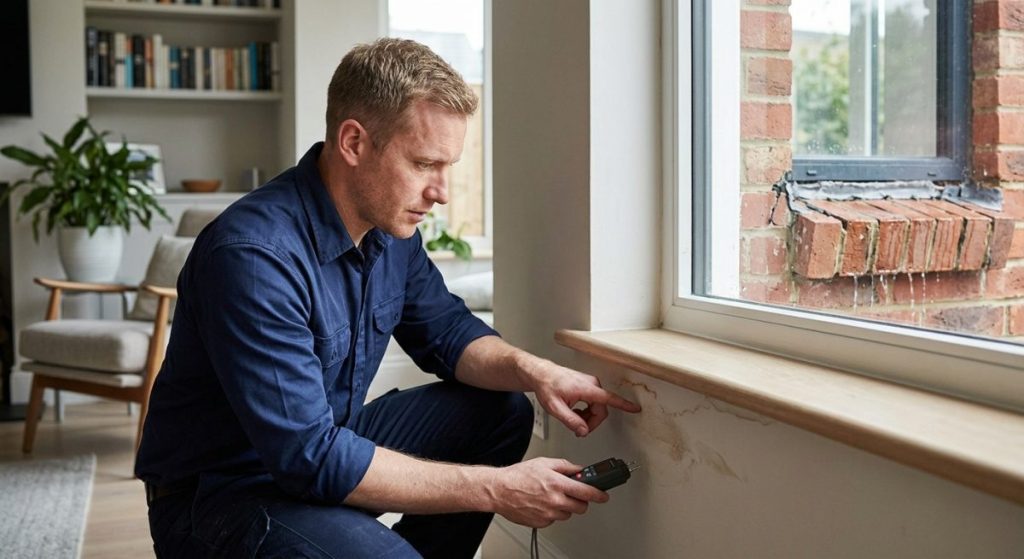
Because water can travel in mysterious ways, trying to pinpoint the exact source yourself is often a losing battle. A professional inspection uses specialized tools and experience to trace the water’s path back to its origin. They’ll check the roof, siding, flashing, and the window unit itself to give you an accurate diagnosis. This prevents you from throwing money at the wrong fix.
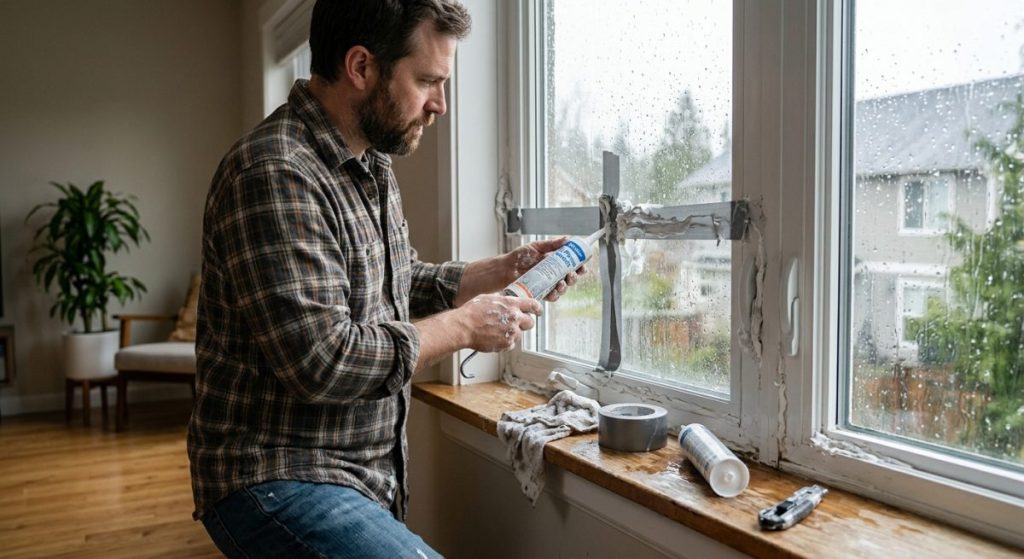
I’ve seen it a thousand times. Homeowners see a small drip and think, “I can fix this myself.” And sure, sometimes you can. But attempting complex window repairs without the right knowledge, tools, or materials is a fast track to making your leaking window problem significantly worse. It’s tempting to save a few bucks, but the reality is often more expensive.
Improper sealant application is a prime example. People grab a tube of caulk and go to town. But not all caulks are created equal.
Using the wrong type, or applying it incorrectly—too much, too little, or in the wrong places—can actually trap moisture. Instead of creating a watertight barrier, you create a dam that holds water against the building materials, accelerating rot and damage. And if you seal up weep holes (we’ll get to those), you’re asking for trouble.
Another common pitfall is damaging window components during the repair. Trying to pry out old seals, replace glass, or adjust hardware with a screwdriver and brute force can easily lead to cracked glass, warped frames, or broken seals. These components are often more delicate than they look. What started as a minor leak might turn into a need for a full window replacement because a DIY attempt broke something crucial.
So, when should you call a professional? If the leak is significant, if you can’t identify the source, if mold is present, or if the repair involves structural elements like the frame or surrounding wall, it’s time to step away from the toolbox.
Professionals have the expertise, specialized tools, and proper materials to fix the leaking window correctly the first time, saving you stress and money in the long run.
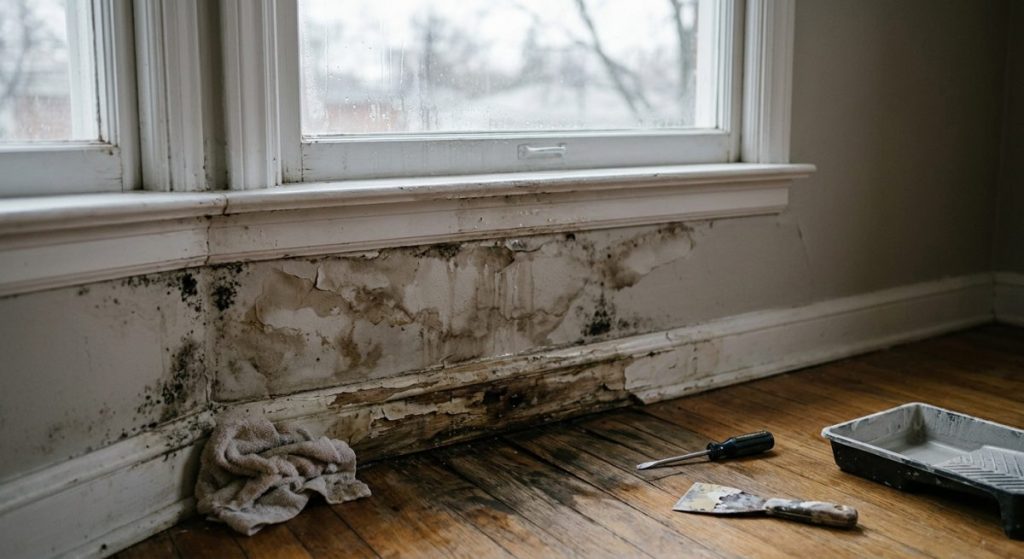
We often focus on the glass or the visible parts of a window, but the frame and its seals are the unsung heroes—or villains— preventing leaks. Ignoring the structural integrity of these components is a major blunder that directly leads to water intrusion. Think of it as a chain; if one link is weak, the whole system fails.
Rotten or damaged window frames are a huge red flag. For wood windows, especially in humid climates like ours, rot can set in gradually. The wood softens, loses its structural integrity, and develops tiny fissures that water can easily exploit. Even minor cracks or peeling paint on a wooden frame can be early indicators that moisture is already getting in and doing damage beneath the surface. Aluminum frames can corrode, and vinyl can crack or warp, all creating pathways for water.
Compromised window seals and weatherstripping are equally problematic. The seals around the operable parts of the window (where the sash meets the frame) and the weatherstripping along the edges are designed to keep out air and water. Over time, these materials degrade. They dry out, crack, shrink, or become compressed, leaving gaps. And what happens when you have gaps? Water finds them. It’s a simple, brutal fact of physics.
The impact of old versus new window leaks also matters. Older windows, particularly single-pane or poorly constructed units, are naturally more prone to leaks due to wear and tear and less advanced sealing technology.
Still, even brand-new, high-end windows can develop leaks if they’re installed improperly or if their seals fail prematurely. It’s not just about age; it’s about the quality of the components and the installation itself.
This is crucial, especially here in Tampa Bay. You can have the best-sealed window in the world, but if the water has nowhere to go once it hits the exterior, you’re going to have problems. Neglecting proper drainage around your windows is a surefire way to invite a leaking window scenario, no matter how well-maintained the window itself is.
Understanding weep holes is fundamental. Most modern windows, particularly vinyl and aluminum ones, have small openings called weep holes, usually along the bottom exterior frame.
Their job is simple but vital: to allow any water that gets *behind* the window sash or into the frame’s drainage channels to escape to the outside. They prevent water from building up inside the window assembly.
And what happens to those weep holes? They get clogged. Leaves, dirt, dust, insect nests—all sorts of debris can accumulate in the bottom tracks and weep holes of your windows. When these drainage channels are blocked, water can’t escape. It backs up, finds the path of least resistance, and can seep into your home. I’ve seen windows that looked fine from the inside but were practically reservoirs behind the frame due to plugged weep holes.
Even landscaping can play a role. If the ground around your foundation slopes towards your house, or if large bushes and mulch beds are piled high against the window frame, water can be directed right where you don’t want it.
Proper grading ensures water flows away from the foundation and windows. Planting trees and shrubs too close can also impede airflow and trap moisture against the exterior, increasing the risk of water infiltration.
So, you’ve decided your leaking window needs replacement. Great. But are you choosing the *right* replacement? Picking the wrong window, or the wrong type of window for our climate, can set you up for the same problems all over again. It’s not just about aesthetics; it’s about performance and longevity, especially in Florida’s challenging environment.
Material matters. In Tampa, we contend with intense sun, high humidity, salt air near the coast, and tropical storms.
Energy efficiency ratings are also key to preventing future water issues. Look for windows with good U-factor and Solar Heat Gain Coefficient (SHGC) ratings. Features like double- or triple-paned glass with inert gas fills (like argon or krypton) and low-emissivity (Low-E) coatings not only save you money on energy bills but also contribute to a more seal. A well-sealed, energy-efficient window is inherently better at keeping water out.
Finally, and this is a big one for Tampa: choose installers familiar with local building codes and environmental challenges. A window is only as good as its installation. Someone who doesn’t understand how to properly flash, seal, and integrate the new window with your existing wall system—especially considering our heavy rains—is setting you up for failure. Always ask about their experience with Tampa’s specific climate and ensure they follow best practices for water management during installation. It’s non-negotiable.
Let’s look at a couple of common situations homeowners here face.
Case Study: The Coastal Home’s Window Woes
The Johnsons, living in a beautiful home in St. Pete Beach, were constantly battling water stains around their living room windows. They’d reseal the frames yearly, but the leaks persisted, especially after heavy rains or windy days. The culprit? Salt air had corroded the original aluminum window frames and degraded the sealant. Water was seeping through microscopic cracks in the corroded metal and failing seals. The solution involved replacing the old aluminum windows with high-quality vinyl units specifically chosen for coastal environments, ensuring proper flashing and sealing techniques were used to combat the salt and moisture.
Common Issues in Older Tampa Homes
Many older Tampa neighborhoods, like Hyde Park or Palma Ceia, feature beautiful historic homes. But their original wood-framed windows, while charming, often succumb to years of humidity and occasional leaks. We frequently see issues with wood rot in the sill and frame, leading to soft spots and water intrusion. Sometimes the original glazing putty fails, allowing water behind the glass. Repairing these often involves carefully removing the rotted sections, treating the remaining wood, and then installing new, custom-fit windows that mimic the original aesthetic while offering modern sealing and efficiency. It’s a delicate balance between preservation and preventing a constant leaking window headache.
Preventing costly repairs and damage from a leaking window boils down to a few core principles. Don’t let minor issues become major disasters.
When in doubt, call an expert. Trying to DIY complex repairs or misdiagnosing the problem will almost always cost you more in the long run. A professional assessment is an investment in preventing greater expense.
And finally, quality installation prevents future leaks. Whether you’re repairing seals or replacing a whole window, ensuring it’s done right, with the right materials for Tampa’s climate, is the most effective way to avoid future headaches.
A well-installed window is a silent protector.
FAQ
Protect your investment from water damage and improve your home’s energy efficiency. Contact us today for a free consultation and expert assessment of your windows. We’ll help you identify issues and provide reliable solutions tailored for the Tampa climate.
Get a Free ConsultationProtect your investment from water damage and improve your home's energy efficiency. Contact us today for a free consultation and expert assessment of your windows.