8414 Sabal Industrial Blvd, Tampa, FL 33619
Hurricane Strong. STH Strong
Mon – Fri 8:00AM – 5:00OM / Sat-Sun – Closed
July 30, 2026 · Reading time: ~11 min
Your patio doors are a major gateway to your outdoor living space. By choosing the right materials and keeping up with basic maintenance, you can protect your investment and enjoy beautiful, functional doors for decades to come.

If you want to stop salt and humidity from destroying your patio doors, the secret comes down to two things: choosing the right materials from the start and keeping up with a simple, consistent rinse routine. In our coastal climate, standard retail doors can fail in as little as three to five years. By upgrading to marine-grade aluminum or impact-resistant vinyl and washing the tracks every few weeks, you can easily double or triple the lifespan of your entryways. If you’re researching Patio Doors Tampa, here’s what you need to know.
This guide is for Tampa homeowners who want to protect their coastal properties from the relentless Florida moisture and salt air that destroys standard exterior fixtures. If you are shopping for new Patio doors tampa homeowners trust, making the right choice now will save you thousands of dollars in premature replacements down the road.
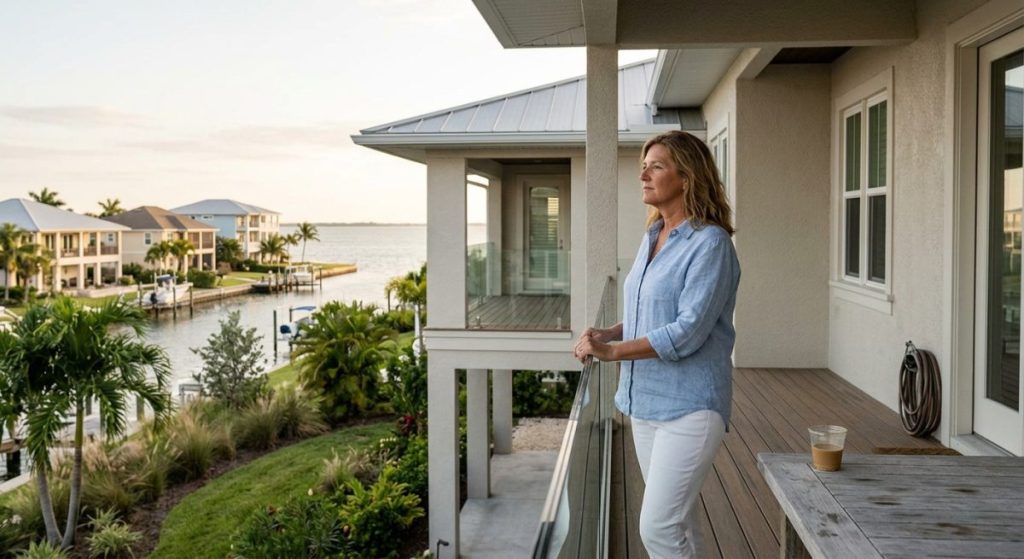
Living in Tampa means dealing with a beautiful but brutal environment. We get intense Gulf heat, near-daily summer thunderstorms, and heavy, saline air blowing off Tampa Bay. This combination creates a highly corrosive pressure cooker for your home’s exterior. It is not just about the homes directly on Bayshore Boulevard or down in Apollo Beach, either. Salt air can travel miles inland, carried by strong afternoon sea breezes. If you live anywhere in the Tampa Bay area, your home is actively fighting against humidity and salt-induced oxidation every single day.
Go to any big-box home improvement store, grab a standard off-the-shelf sliding door, and install it in Tampa. What happens? Within two or three years, the rollers start to grind, the lock mechanism gets sticky, and the vinyl might even begin to warp under the baking sun. These standard doors are built for moderate climates, not the sub-tropical reality of West Central Florida. They lack the heavy-duty weatherstripping, corrosion-resistant hardware, and structural reinforcement required to handle our daily humidity cycles. Before you know it, you are dealing with drafts, water leaks during severe storms, and a door that takes two hands and a foot to slide open.
To defeat the enemy, you have to understand how it works. Salt and humidity do not just sit on your doors; they actively attack them on a microscopic level.
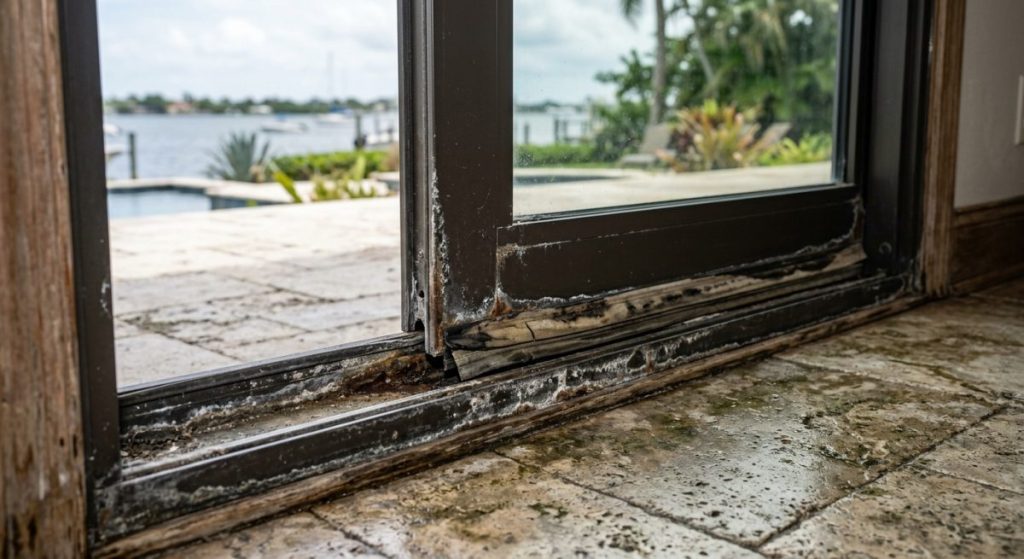
Salt air is loaded with tiny sodium chloride particles. When these particles settle on metal surfaces, they act as an electrolyte. This dramatically accelerates the chemical process of oxidation. If your door has standard steel hinges, screws, or rollers, the salt air will eat through them in no time. You will first notice a white, powdery residue—this is aluminum oxidation—followed by red rust on steel parts. Once rust takes hold of your rollers or lock latch, the door is on borrowed time.
Some homeowners love the look of natural wood, but putting a standard wood sliding door on a Tampa patio is asking for trouble. Wood is hygroscopic, meaning it acts like a sponge, absorbing and releasing moisture from the air. With Tampa’s humidity regularly hovering above 80%, wood doors swell and expand. This causes them to stick in their frames. When the dry winter months arrive, they shrink, leaving gaps that let your expensive air conditioning escape. Over time, this constant cycle of swelling and shrinking warps the frame, breaks the glass seals, and invites wood-destroying fungi to set up camp.
Think about what happens when you step outside in July. Your glasses immediately fog up. The same thing happens to your patio doors. When you run your air conditioning at a comfortable 72°F inside while it is 92°F and dripping wet outside, your glass and frames become incredibly cold. This temperature differential causes moisture to condense on the exterior surfaces. If your door lacks proper thermal barriers, that condensation can also form on the inside of the frame, leading to mold and mildew growth along the drywall and baseboards.
When it comes to selecting Florida Building Code approved patio doors, material choice is your first and strongest line of defense. Let’s break down how the three most common materials hold up against the Tampa climate.
| Material | Salt Resistance | Humidity Resistance | Maintenance Required | Expected Lifespan (Tampa) |
|---|---|---|---|---|
| Fiberglass | Excellent | Excellent | Very Low | 20+ Years |
| High-Quality Vinyl | Excellent | Excellent | Low | 15–20 Years |
| Marine-Grade Aluminum | Good (with coating) | Excellent | Moderate | 15–20 Years |
| Standard Wood | Poor | Poor | High | 5–10 Years |
Fiberglass is arguably the king of coastal patio doors. It is made from glass fibers and resin, meaning it is completely immune to rust, rot, and corrosion. It does not expand or contract with temperature swings, so your door will slide just as smoothly in the dead of August as it does during our brief January cold snaps. While it sits at a higher price point, the lack of maintenance and sheer durability make it a smart investment for waterfront homes.
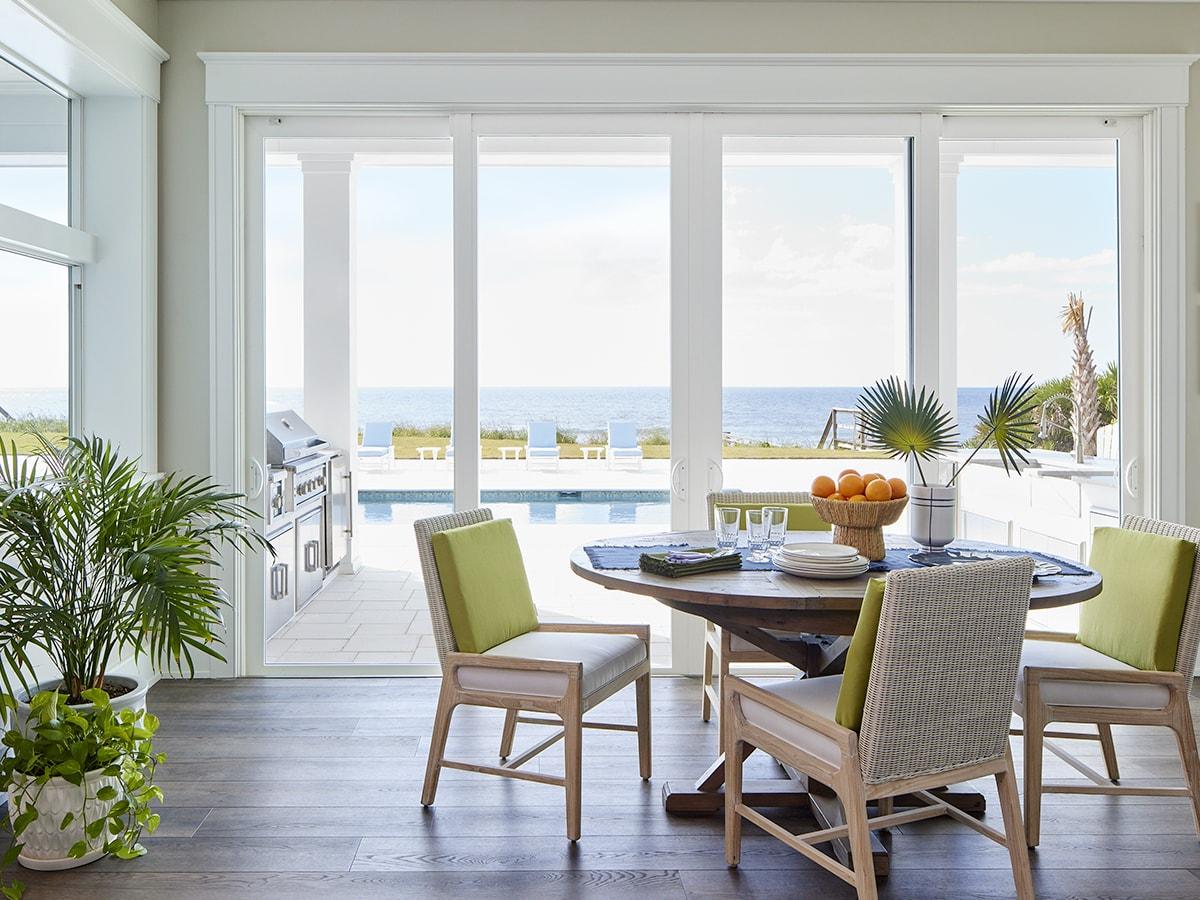
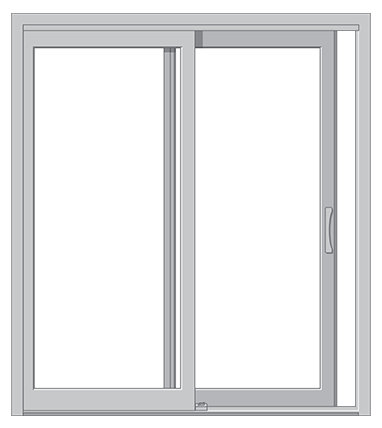
High-quality vinyl is another fantastic, moisture-resistant alternative that won’t pit, peel, or corrode over time. If you want a reliable, cost-effective option, look at the CWS® WINDPACT Vinyl Sliding Patio Door. This vinyl impact sliding patio door is specifically engineered to protect Florida homes from strong hurricanes and intruders while shrugging off salt spray. Vinyl does not conduct heat, making these doors incredibly energy efficient, keeping the Tampa heat outside where it belongs.
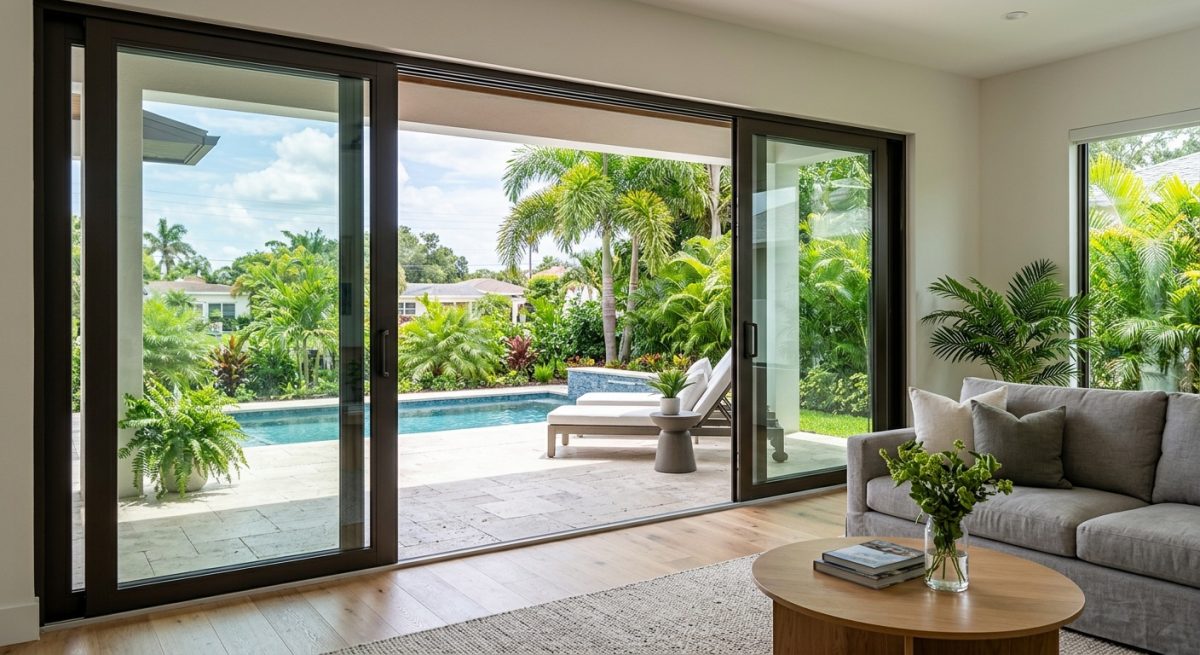
Aluminum is incredibly strong and allows for very thin, modern frames with massive glass views. However, raw aluminum will oxidize quickly in salt air. That is why you must choose a door with a marine-grade finish. The CWS® ICON Aluminum Sliding Door is a prime example. It features heavy-duty aluminum panels and frames with a multi-point mortise lock for maximum security and durability. Because aluminum conducts heat, these doors require built-in thermal breaks to keep your home energy efficient and prevent condensation.
Vinyl Doors (e.g., CWS® WINDPACT)
Aluminum Doors (e.g., CWS® ICON)
Even the best coastal patio doors need a little love to stay in peak condition. Salt is patient, and it will find any unprotected nook or cranny. Here is the maintenance routine we recommend to all of our local clients.
Do not wait for a white crust to form on your glass before you clean your doors. If you live within a mile of the bay or the Gulf, you should rinse your doors every two to four weeks. If you are further inland, every three months is usually fine.
The tracks of your sliding glass doors tampa home are a magnet for dirt, pet hair, and salt. If you do not keep them clean, the rollers will wear out prematurely, making the door heavy and hard to open.
Weatherstripping is the unsung hero of your patio door. It keeps the hot, humid air out and the cool air in. Over time, the intense Florida sun will degrade the rubber or felt. Inspect your weatherstripping twice a year. Look for cracks, flat spots, or areas where the material has pulled away from the frame. If you can feel a draft or see light peeking through when the door is closed, it is time to replace it. Keeping your seals tight is crucial for preventing humidity resistant doors from losing their efficiency.
When it is time for a door replacement tampa homeowners should look beyond just the frame material. The glass and hardware choices you make are just as critical for long-term survival.
In Tampa, hurricane impact doors tampa residents install do double duty. Yes, they protect your home from flying debris during a hurricane, but they also offer incredible daily protection. Laminated impact glass features a tough interlayer that keeps the glass intact even if shattered. This interlayer also blocks up to 99% of UV rays, preventing your furniture and flooring from fading under the harsh Florida sun.
Additionally, you must insist on stainless steel or brass hardware. Standard zinc-plated or steel locks and rollers will rust quickly. Marine-grade stainless steel rollers will slide smoothly for decades without binding up.
You can buy the most expensive, high-performance door on the market, but if it is installed poorly, it will fail. In Tampa, most homes are constructed with concrete block and stucco. Stucco is incredibly porous and holds onto moisture. Proper flashing, high-grade exterior sealants, and precise leveling are non-negotiable. If the installer does not seal the threshold correctly, rainwater will seep under the track, rotting out your subfloor and creating a hidden mold problem behind your baseboards.
To see this in action, look at a project we recently completed for a homeowner living right on Bayshore Boulevard in South Tampa. They had beautiful, high-end wood sliding doors installed in 2021. By 2026, those doors were completely ruined. The wood had swollen so badly from the humidity that they could barely slide them open, and the salt air had completely corroded the lock mechanisms.
“We loved the look of our wood doors, but the maintenance was a nightmare. They stuck constantly, and we were always worried about water leaks during summer storms. Upgrading to the CWS® WINDPACT vinyl sliding doors completely changed how we use our patio. They slide with one finger, and we don’t have to worry about the salt air ruining them.” — Sarah M., South Tampa Resident
We replaced their failing wood doors with the CWS® WINDPACT Vinyl Sliding Patio Door. The vinyl frames match the clean, white aesthetic of their home, but they will never swell, rot, or pit. Because these are impact-rated, the homeowners also gained peace of mind during hurricane season and slashed their monthly cooling bills.
Your patio doors are a major gateway to your outdoor living space. By choosing the right materials and keeping up with basic maintenance, you can protect your investment and enjoy beautiful, functional doors for decades to come.
For homes within a mile of Tampa Bay or the Gulf, clean your doors every 2 to 4 weeks. If you live further inland, a thorough cleaning with mild soap and water every 3 months is sufficient to prevent salt and dirt buildup.
Fiberglass and high-quality vinyl, like the CWS® WINDPACT series, are the best choices. They are completely immune to rot, rust, and salt-air corrosion, making them highly durable in coastal environments.
Salt air does not damage the glass itself, but it can corrode the metal spacers and hardware if they are not marine-grade. Regular cleaning prevents salt from etching the glass surface and preserves the structural seals.
Yes, Tampa is located in a Wind-Borne Debris Region. According to the Florida Building Code, replacement patio doors must be impact-rated or protected by approved shutters to withstand hurricane-force winds.
For a deeper look, see Patio Doors in Tampa, FL: Wood vs. Vinyl Durability.
Don’t let Tampa’s humidity and salt air ruin your home’s entryways. Contact our local experts today for a free, in-home consultation and find the perfect weather-resistant patio doors for your home.
Based on this article, here are products that might help you:
Gliding horizontally along a track, CWS WindPact vinyl impact sliding patio doors protect homes from…
View ProductFeel safe and secure. CWS Icon aluminum impact sliding patio door feature aluminum panels and…
View ProductDon't let Tampa's humidity and salt air ruin your home's entryways. Contact our local experts today for a free, in-home consultation and find the perfect weather-resistant patio doors for your home.