8414 Sabal Industrial Blvd, Tampa, FL 33619
Hurricane Strong. STH Strong
Mon – Fri 8:00AM – 5:00OM / Sat-Sun – Closed
July 28, 2026 · Reading time: ~11 min

Our weather in Tampa is beautiful, but it’s incredibly tough on building materials. Any exterior door or window you install has to act as a shield against a combination of environmental factors that you just don’t find in most other parts of the country. If you’re researching Patio Doors Tampa Fl, here’s what you need to know.
Tampa’s average relative humidity sits at nearly 74%, and during our long summer months, it regularly hovers close to 90%. This constant moisture in the air is a silent killer for vulnerable building materials. When porous materials are exposed to this level of humidity day in and day out, they absorb water. This leads to swelling, mold growth, and eventually, structural rot that can ruin a door’s frame and make it impossible to open or close smoothly.
We don’t call Florida the Sunshine State for nothing. The UV index in Tampa regularly hits extreme levels for most of the year. This constant bombardment of ultraviolet radiation acts like a slow-motion blowtorch on exterior finishes. It breaks down paint, fades stains, and causes materials to expand and contract rapidly as temperatures swing from day to night. This thermal expansion puts immense stress on the seals and structural integrity of your patio doors.
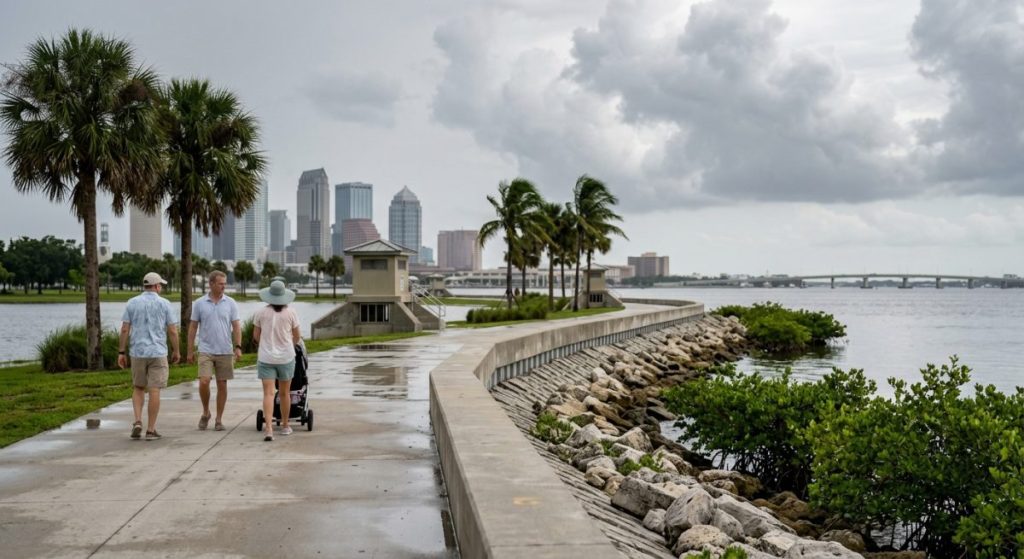
Living near Tampa Bay or the Gulf means dealing with salt-laden air, which acts as an abrasive and corrosive agent. Standard metal hardware can rust and seize up in a matter of seasons. On top of that, our annual hurricane season brings high-velocity winds and driving rain. If your patio doors aren’t built to withstand these pressures, you’re looking at potential water intrusion and structural failure when a major storm rolls through.
When Tampa homeowners visit our showroom, they usually have a specific aesthetic in mind. However, choosing the best patio doors for Florida climate requires balancing looks with long-term performance. Let’s look at how the two heavyweights compare.
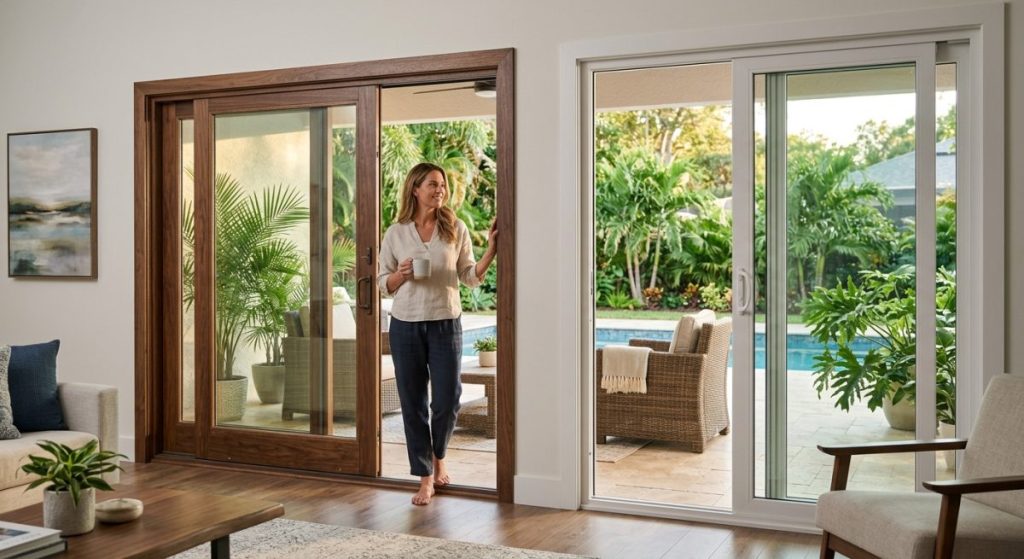
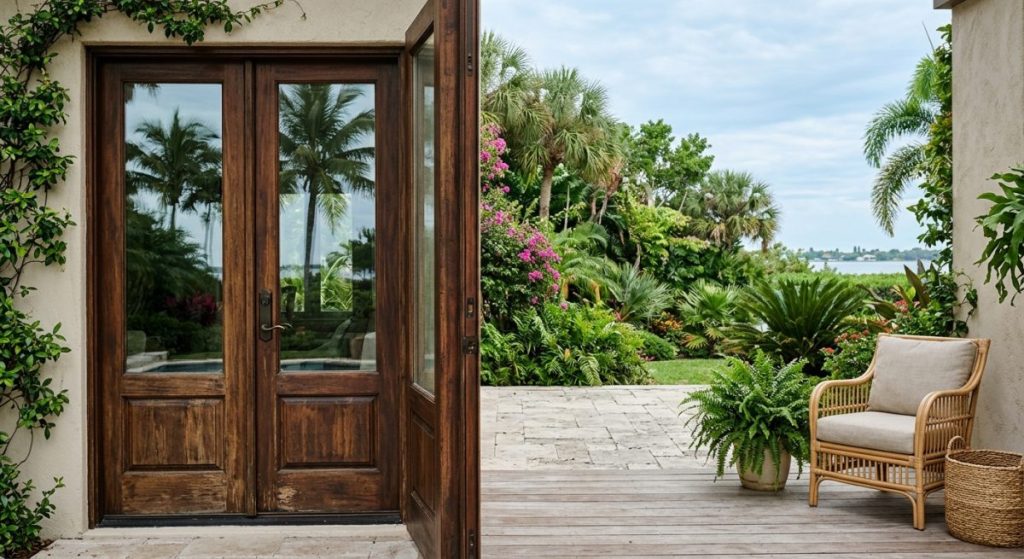
There’s no denying that wood french doors Tampa have a certain soul to them. Wood is heavy, structurally rigid, and offers a warm, premium look that synthetic materials struggle to replicate perfectly. It’s highly customizable; you can paint or stain it any color you want, and it fits beautifully in historic homes. But that organic nature is also its greatest vulnerability in a subtropical climate.
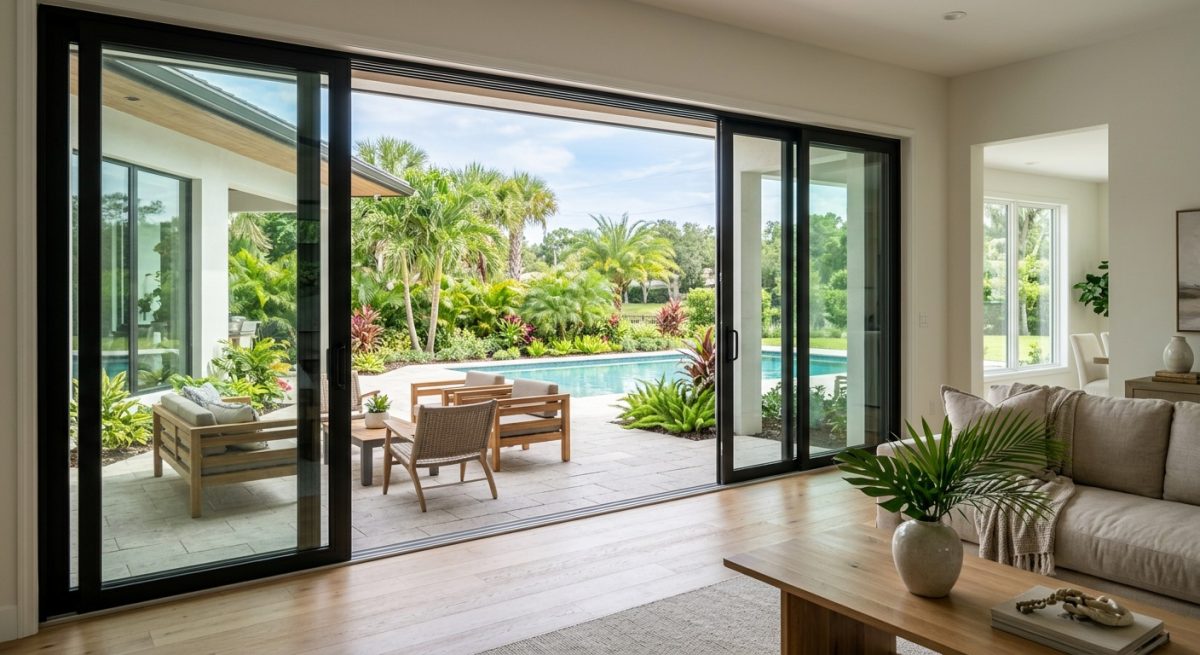
Modern vinyl sliding glass doors Tampa have come a long way from the cheap, plastic-looking options of thirty years ago. Today’s vinyl is a highly engineered compound designed specifically for harsh climates. It’s incredibly durable, offers fantastic thermal performance, and doesn’t require painting or sealing. For the vast majority of Tampa homeowners, vinyl represents the ultimate “set-it-and-forget-it” solution.
If you have your heart set on wood, you need to go into the purchase with your eyes wide open. Wood can survive in Florida, but it requires a level of commitment that many homeowners find exhausting.
Because wood is organic, it’s a food source for pests and a breeding ground for fungi. Tampa’s subterranean termites are a constant threat, and they love damp wood. When moisture gets past a wood door’s protective paint or sealant, the wood fibers swell. Over time, this constant cycle of swelling and drying causes the wood to warp, twist, and split. Once a wood frame warps, the weatherstripping no longer seals correctly, which lets your expensive air conditioning escape and allows rainwater to seep into your home.
To keep wood patio doors from deteriorating, you must commit to a strict maintenance schedule. This means inspecting the doors every year, scraping off peeling paint, sanding down rough spots, and applying fresh coats of high-quality exterior paint or marine-grade sealant every two to three years. If you neglect this chore even once, the Florida elements will quickly take advantage of the vulnerability.
If you absolutely must have the look of wood, we usually steer clients away from solid wood and toward clad-wood or engineered wood options. Clad-wood doors feature a real wood interior for beauty, but the exterior is covered in a protective layer of heavy-duty aluminum or vinyl. This gives you the best of both worlds: the warmth of wood inside your home and a weather-resistant shield on the outside.
Pros:
Cons:
Vinyl has become the dominant material for patio doors in our area, and for good reason. It’s practically engineered in a lab to defeat the Florida climate.
High-quality vinyl doors are formulated with special additives, like titanium dioxide, which act as a sunscreen for your doors. This compound reflects harmful UV rays rather than absorbing them, preventing the vinyl from yellowing, cracking, or becoming brittle under the hot Florida sun. The color is extruded throughout the entire material, meaning scratches won’t show and you’ll never have to pick up a paintbrush.
Because vinyl is completely non-porous, moisture simply runs off it. It can’t absorb water, which means it will never rot, swell, mold, or warp, no matter how humid it gets. Termites have absolutely no interest in it, and it won’t corrode or rust when exposed to salt air near the coast.
Vinyl is an excellent insulator. Premium vinyl patio doors feature multi-chambered frames that trap air inside, creating a powerful thermal barrier. This prevents the blazing outdoor heat from transferring into your air-conditioned home. When paired with high-performance, double-pane glass, energy efficient patio doors can noticeably lower your monthly TECO energy bills.
“We’ve found that homeowners who switch from old wood sliding doors to modern vinyl options notice an immediate drop in the heat radiating through their glass, making their living spaces feel much more comfortable.”
Pros:
Cons:
To help you weigh these options, let’s look at how they stack up side-by-side across the metrics that matter most to Tampa homeowners.
| Feature | Wood Patio Doors | Vinyl Patio Doors |
|---|---|---|
| Lifespan in Tampa | 10–15 years (highly dependent on heavy maintenance) | 20–30+ years (with minimal care) |
| Maintenance Required | High (sanding, painting, sealing every 2-3 years) | Very Low (occasional cleaning of tracks and glass) |
| Moisture & Rot Resistance | Poor (prone to swelling, rot, and mold) | Excellent (100% waterproof and rot-proof) |
| Energy Efficiency | Good (natural insulator, but seals can fail if warped) | Excellent (multi-chambered frames block heat transfer) |
| Upfront Cost | Expensive / Premium pricing | Moderate / Highly cost-effective |
In our experience, a well-maintained vinyl patio door will easily last 20 to 30 years in Tampa without losing its structural integrity or color. A wood door can theoretically last that long, but only if you are incredibly disciplined with maintenance. In reality, we frequently replace rotted wood doors that are less than ten years old because the homeowner simply didn’t have the time to keep up with the grueling painting and sealing schedule.
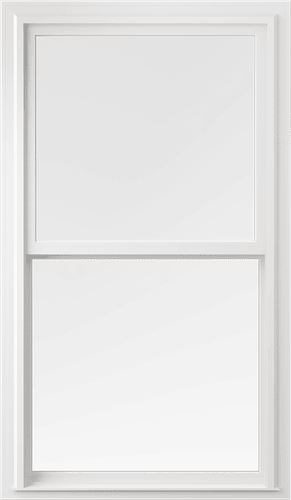
When it comes to keeping your home cool, both materials perform well when brand new. However, vinyl maintains its energy efficiency over time because it doesn’t warp. If a wood door warps even slightly, it creates tiny gaps in the weatherstripping, allowing hot air and humidity to leak inside. At STH Windows & Doors, we use the same advanced vinyl technology found in our ENERGYVUE VINYL – Double Hung Window product line to ensure our vinyl patio doors deliver top-tier thermal performance and meet strict ENERGY STAR® guidelines.
Wood doors carry a premium price tag, often costing double what a comparable vinyl door costs. When you factor in the ongoing cost of paint, sealants, and professional labor over the years, the lifetime cost of a wood door skyrockets. Vinyl offers incredible upfront value and saves you money every year in both maintenance costs and energy savings.
The best material for your home can also depend heavily on exactly where you live in the Tampa Bay area. Microclimates are real, and they impact your home’s exterior features.
If you live right on the water in Davis Islands, your home is constantly subjected to high winds, salt spray, and intense, unshaded sun. In this environment, wood doors are a recipe for disaster. The salt air will quickly corrode standard hardware, and the moisture will find its way into the wood grain. For waterfront homes, we always recommend impact rated patio doors Tampa made of heavy-duty vinyl. They won’t corrode, they stand up to the salt, and they provide the hurricane protection required by the Florida Building Code.
Hyde Park is famous for its gorgeous, historic craftsman bungalows. If you live in this historic district, you have to follow strict local preservation guidelines. Often, these rules mandate that replacement doors must be made of wood to maintain the historic character of the neighborhood. In these cases, we work with homeowners to find high-quality clad-wood doors or historically approved wood doors, and we make sure they understand the maintenance commitment required to protect their investment.
Ready to make a decision? Use this simple checklist to evaluate your home and lifestyle before you buy.
High-quality vinyl patio doors can easily last 20 to 30 years in Tampa. Modern vinyl is formulated with advanced UV stabilizers like titanium dioxide, which prevent cracking, warping, and fading despite constant exposure to the intense Florida sun.
Yes, natural wood doors are highly susceptible to warping, swelling, and rotting in Florida’s high humidity. Without continuous sealing, painting, and maintenance every 2 to 3 years, moisture will penetrate the wood fibers and ruin the door’s alignment.
Absolutely. Many modern vinyl patio doors are engineered with internal steel or aluminum reinforcements. This heavy-duty construction allows them to achieve high design pressure (DP) ratings and easily meet strict Florida building codes for wind and impact resistance.
While both materials are good natural insulators, vinyl patio doors with multi-chambered frames typically offer superior, cost-effective thermal performance. They block radiant heat transfer more efficiently, keeping your home cooler and reducing the strain on your air conditioner.
For a deeper look, see Sliding Patio Doors for Tampa: Energy Efficiency Guide.
Don’t let Florida’s harsh climate compromise your home’s comfort and security. Contact our local Tampa window and door experts today for a free, no-obligation consultation on the perfect weather-resistant patio doors.
Based on this article, here are products that might help you:
Designed with removable sashes for efficient ventilation, our EnergyVue double-hung window offers a new level…
View ProductDon't let Florida's harsh climate compromise your home's comfort and security. Contact our local Tampa window and door experts today for a free, no-obligation consultation on the perfect weather-resistant patio doors.