8414 Sabal Industrial Blvd, Tampa, FL 33619
Hurricane Strong. STH Strong
Mon – Fri 8:00AM – 5:00OM / Sat-Sun – Closed
August 1, 2026 · Reading time: ~13 min
Investing in an iron door can completely transform your home, but success in our climate requires making smart decisions from the very start.
It is infinitely easier and cheaper to prevent rust than it is to fix it. Buying a door with hot-dip galvanization and a high-quality powder-coated finish might cost more upfront, but it will save you thousands of dollars in refinishing costs and headaches down the road. Combine that quality build with a quick monthly rinse, and your door will remain beautiful for decades.
Do not buy your doors from national online retailers who do not understand the unique demands of the Florida building code doors regulations or our corrosive salt air. Work with a local specialist who knows how to specify the right thermal breaks, impact glass, wind-load ratings, and marine-grade finishes required to keep your home safe, beautiful, and energy-efficient in Tampa’s demanding climate.

To keep iron doors in Tampa from rusting, you must block salt and moisture from reaching the raw metal. This requires buying doors treated with hot-dip galvanization, finished with marine-grade powder coatings, and maintaining them with a simple monthly fresh-water wash to remove salt buildup. This guide is for Tampa homeowners who want to protect their investment in luxury wrought iron entryways from the relentless Florida humidity and salt spray. If you are planning to install Iron doors in Tampa, understanding how to combat our unique coastal environment is the difference between a stunning, lifelong entryway and an expensive, corroded headache. If you’re researching Iron Doors Tampa, here’s what you need to know.
There is no denying the visual impact of a grand iron entryway. It changes the entire character of a home, turning a simple facade into an architectural statement. In our local market, where home designs range from historic estates to ultra-modern waterfront builds, iron doors offer a level of customization and presence that wood or fiberglass simply cannot match.
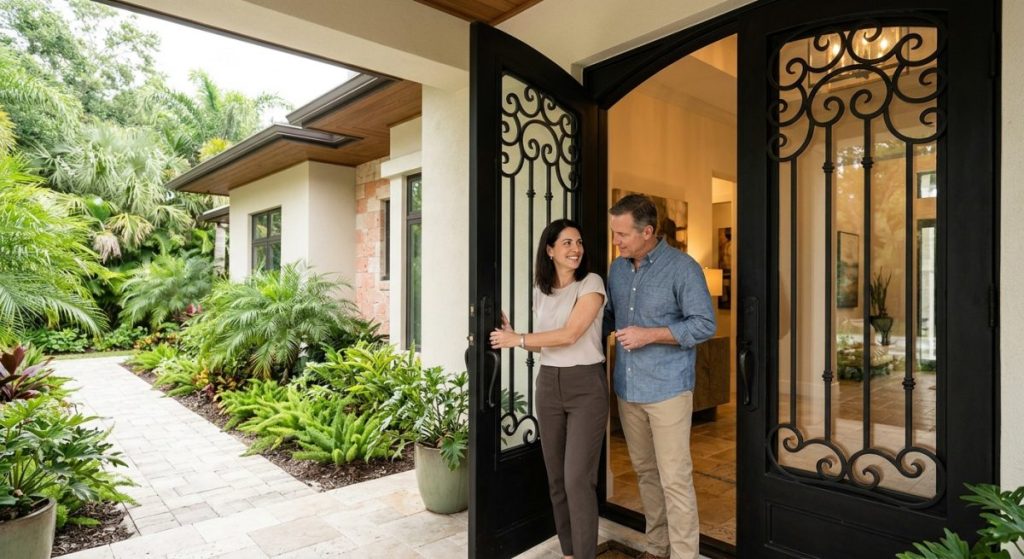
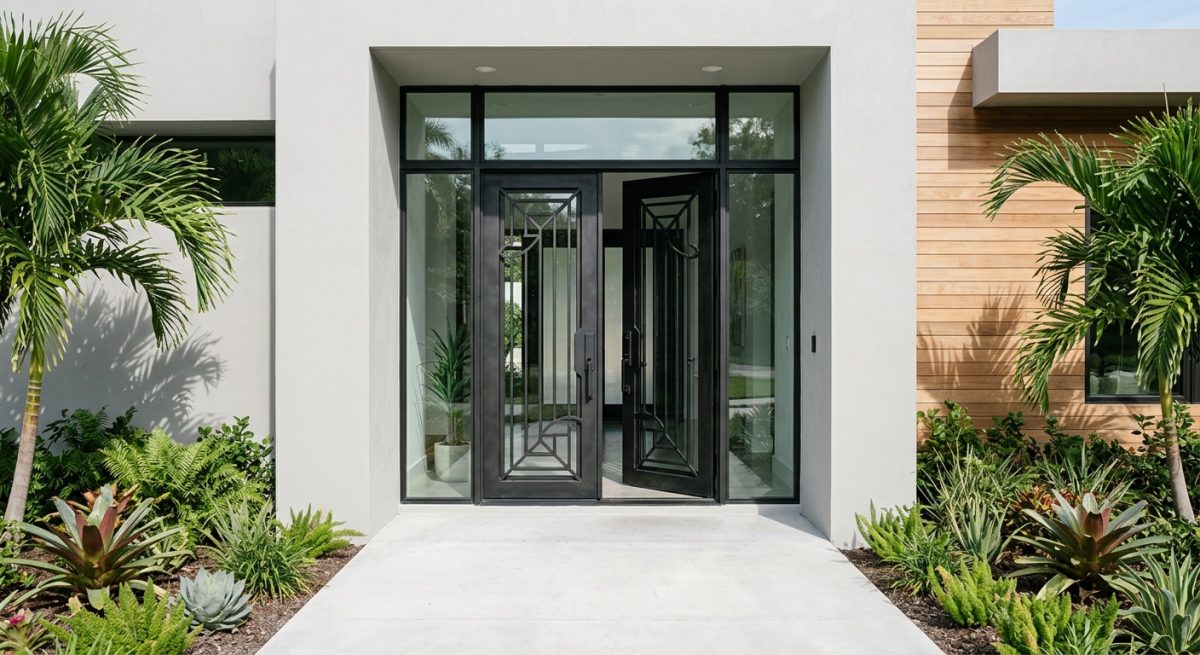
Walk through the historic streets of Hyde Park or drive along the waterfront on Davis Islands, and you will see how deeply Spanish Colonial, Mediterranean Revival, and custom modern architectures are woven into Tampa’s identity. Wrought iron doors tampa homeowners choose often feature intricate scrollwork, heavy-duty hinges, and custom glass panels that perfectly complement these historic styles. They offer a sense of permanence and security that fits the grand scale of these neighborhoods. Whether it is a double arched door for a Mediterranean villa or a sleek, minimalist steel-and-glass pivot door for a contemporary home on South Tampa’s waterfront, iron serves as a bridge between classic craftsmanship and modern design.
An elegant entry door is one of the highest-yielding investments you can make in your home’s curb appeal. Buyers in high-end Tampa neighborhoods look for premium materials that signal quality construction throughout the rest of the property. A custom iron door does exactly that. It creates an immediate first impression of security, luxury, and durability. Because these doors are built to last for decades when properly cared for, they retain their value and continue to elevate the property’s market price long after installation.
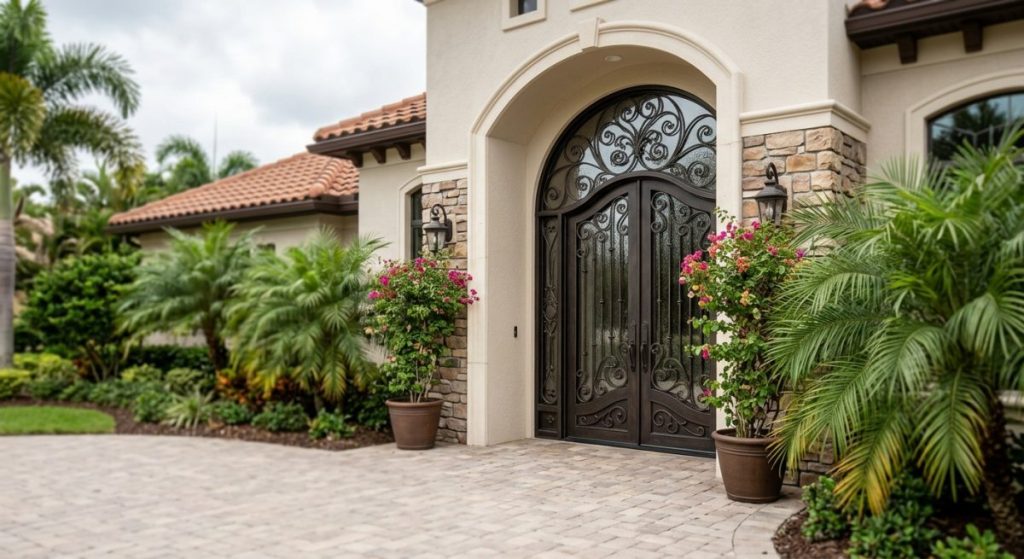
While iron is incredibly strong, it has a natural vulnerability: oxygen and moisture. In Tampa, our geography makes this vulnerability a constant battle. We live in a subtropical microclimate surrounded by Tampa Bay, Hillsborough Bay, and the Gulf of Mexico. This means our air is not just wet—it is salty and chemically active.
“The combination of high relative humidity, elevated temperatures, and airborne chlorides from the Gulf makes coastal Florida one of the most corrosive environments in North America for architectural metals.”
If you live within five miles of the water—whether that is Bayshore Boulevard, Beach Park, or Westchase—your home is constantly exposed to airborne salt. Wind carries microscopic salt crystals inland. These crystals land on your door and act like tiny sponges, pulling moisture directly out of our humid air and holding it against the metal surface. This creates a persistent wet film that accelerates the natural oxidation process, causing untreated or poorly finished iron to degrade rapidly.
Rust is not just an aesthetic issue; it is a chemical reaction that eats away at the structural integrity of your door. When iron is exposed to oxygen and water, it undergoes a chemical reaction called oxidation, creating iron oxide. In a dry climate, this process is slow. But add salt to the mix, and the salt acts as an electrolyte, speeding up the chemical reaction exponentially. Once rust starts, it expands. It lifts the protective paint or powder coating from the inside out, exposing even more raw metal to the elements and causing the finish to bubble, crack, and flake away.
It is not just the moisture that causes trouble; our intense Florida sunshine plays a major role. Ultraviolet (UV) radiation breaks down the chemical bonds in standard paints and clear coats. Over time, this UV damage causes the protective topcoat to oxidize, fade, and develop microscopic cracks. Once the sun compromises the paint barrier, moisture and salt air slip through the cracks, reaching the underlying iron and starting the rust cycle. This is why standard exterior paint is never enough for iron doors in coastal Florida.
When shopping for iron doors, you cannot just look at the design. You have to look at how the door is engineered. A door built for a dry climate like Arizona will fail within a few years in Florida. You need to look for specific engineering features designed to handle our heat, humidity, and storm seasons.
Iron is an excellent conductor of heat. Without a thermal break, a dark iron door facing the afternoon Tampa sun will absorb heat and radiate it directly into your foyer, forcing your air conditioning system to work overtime. A thermal break is an insulating barrier placed inside the door frame and panel. It separates the exterior metal from the interior metal, preventing heat transfer and keeping your home cooler, your energy bills lower, and your interior glass from sweating in the summer humidity.
Never buy an iron door that has only been painted with a standard primer. For coastal performance, the door must undergo a rigorous multi-step finishing process. This starts with sandblasting to remove all surface impurities, followed by the application of a zinc-rich primer or a marine-grade epoxy primer. Zinc acts as a sacrificial anode; even if the topcoat is scratched, the zinc will corrode before the underlying iron does, preventing rust from spreading underneath the finish.
In Florida, your front door is part of your home’s structural defense against severe weather. To comply with the Florida Building Code, any new exterior door installed in the Tampa Bay area must meet strict wind-load and design pressure requirements. Choosing Hurricane rated iron doors ensures your entryway can withstand flying debris and extreme wind pressures during a storm.
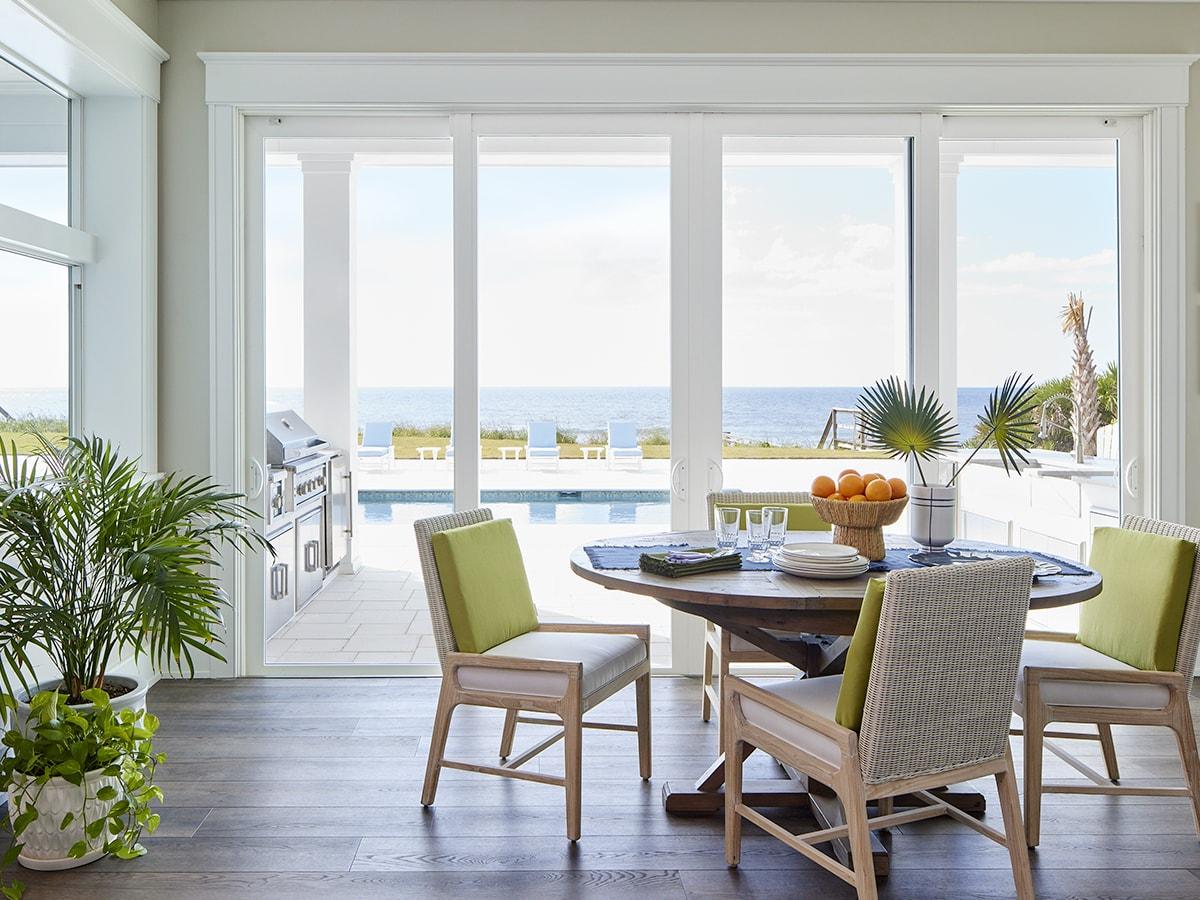
If you are upgrading your front entrance with a heavy-duty iron door, you should ensure the rest of your home’s openings match that level of protection. For instance, many of our clients pair a grand front iron door with high-performance impact sliding doors in the back, such as the CWS® WINDPACT Vinyl Sliding Patio Door. These impact-resistant sliding glass doors glide horizontally along a track and protect your home from strong hurricanes and intruders, ensuring your entire home envelope is secure.
No metal door is completely maintenance-free in a coastal environment. However, keeping your iron door looking brand new does not require hours of hard labor—it just requires consistency. Implementing a simple, regular maintenance routine will save you thousands of dollars in restoration costs down the road.
The single most effective way to prevent rust is to wash the salt off your door before it can cause damage. If you live close to the bay or the gulf, do this once a month. If you live further inland, once every three months is usually plenty.
While cleaning your door, take two minutes to perform a visual inspection. Catching rust early is the key to simple, inexpensive repairs. Check the bottom of the door frame, the welds around the scrollwork, the hinges, and the areas around the glass panel latches. Look for bubbling paint, tiny orange or brown spots, or a rough texture. If you find any of these signs, address them immediately before the rust can eat deeper into the metal.
If your keys scratch the door or a piece of debris nicks the finish, you need to seal that scratch quickly to prevent moisture from getting underneath. Keep a small bottle of matching touch-up paint provided by your manufacturer. Lightly sand the scratched area with fine-grit sandpaper (around 220 grit) to remove any loose paint or surface rust. Wipe the area clean with rubbing alcohol, apply a thin layer of rust-inhibiting primer, let it dry, and then carefully apply the touch-up topcoat.
The longevity of your iron door depends almost entirely on the quality of its protective finish. When comparing doors, you will generally run into three main finishing options. Understanding the differences will help you make an informed decision for your home.
Traditional wet paint is applied with a spray gun and dries in the air. While it is easy to touch up, wet paint is relatively thin and prone to chipping, fading, and peeling under the intense Florida sun. Powder coating, on the other hand, is applied as a dry powder using an electrostatic charge, then cured under high heat in an industrial oven. This process fuses the powder into a thick, durable, and flexible plastic-like skin that is highly resistant to scratching, UV fading, and moisture penetration.
If you want the absolute best protection against coastal rust, look for doors that are hot-dip galvanized. In this process, the entire iron door frame and panel are submerged in a bath of molten zinc at roughly 840°F (449°C). The zinc chemically bonds with the iron, creating a multi-layered alloy barrier that completely seals the metal inside and out—even inside the hollow tubes of the door frame. Even if the outer powder coat is deeply scratched, the zinc layer prevents rust from forming or spreading.
| Finish Type | Rust Resistance | UV Durability | Maintenance Level | Best Suited For |
|---|---|---|---|---|
| Standard Wet Paint | Low | Moderate | High (requires frequent touch-ups) | Inland homes, budget-conscious projects |
| Powder Coating | Moderate to High | High | Low to Moderate | Standard suburban homes in Tampa |
| Hot-Dip Galvanized + Powder Coat | Exceptional (Marine Grade) | Very High | Very Low | Waterfront homes (Bayshore, Davis Islands, Beach Park) |
To understand the importance of proper coastal care, let’s look at a real-world scenario we encountered on Bayshore Boulevard. The homeowners had purchased a beautiful custom iron double door from an out-of-state manufacturer who did not specialize in coastal finishes. After just four years of exposure to the salt spray and humidity directly off Hillsborough Bay, the door was in rough shape.
The bottom six inches of both door panels showed severe paint bubbling, and orange rust was actively weeping from the welds of the scrollwork. The standard wet paint finish had oxidized under the intense afternoon sun, turning a chalky gray and cracking along the edges. Because the door had not been galvanized, the rust had quickly spread beneath the paint, threatening to ruin the structural integrity of the scrollwork and hinges.
We brought in our restoration specialists to save the entryway. First, we sealed off the foyer and carefully removed the heavy door panels. We used wire wheels and media blasting to strip the bottom third of the doors down to bare, white metal, completely removing all traces of rust. Next, we treated the raw iron with a chemical rust converter to neutralize any microscopic oxidation remaining in the metal pores.
We then applied a high-build, zinc-rich epoxy primer to seal the metal, followed by two coats of a marine-grade polyurethane topcoat matched to the original satin black finish. To prevent future issues, we replaced the rusted steel hinge pins with stainless steel pins and applied a commercial-grade marine wax. Finally, we set the homeowners up with a simple monthly fresh-water wash routine. Two years later, the door still looks as pristine as the day we reinstalled it.
Investing in an iron door can completely transform your home, but success in our climate requires making smart decisions from the very start.
It is infinitely easier and cheaper to prevent rust than it is to fix it. Buying a door with hot-dip galvanization and a high-quality powder-coated finish might cost more upfront, but it will save you thousands of dollars in refinishing costs and headaches down the road. Combine that quality build with a quick monthly rinse, and your door will remain beautiful for decades.
Do not buy your doors from national online retailers who do not understand the unique demands of the Florida building code doors regulations or our corrosive salt air. Work with a local specialist who knows how to specify the right thermal breaks, impact glass, wind-load ratings, and marine-grade finishes required to keep your home safe, beautiful, and energy-efficient in Tampa’s demanding climate.
Yes, raw iron rusts quickly in Tampa due to our high humidity and airborne salt. However, modern iron doors treated with hot-dip galvanization and finished with marine-grade powder coatings are highly resistant to rust, provided they receive basic, regular maintenance to wash away salt deposits.
If you live within five miles of Tampa Bay or the Gulf, we recommend washing your door with mild soap and fresh water once a month. For inland Tampa homes, a thorough cleaning and inspection every three months is usually sufficient to prevent salt and dirt buildup.
Yes, but only if they are engineered, tested, and certified to meet the wind-load and impact standards of the Florida Building Code. Always verify that your chosen door has a valid Florida Product Approval number before purchasing and installing it in the Tampa area.
No, painting directly over rust will only trap moisture and accelerate the corrosion process underneath, causing the new paint to bubble and peel quickly. You must completely sand or grind away the rust down to bare metal, apply a zinc-rich primer, and then apply your topcoat.
For a deeper look, see Tampa Patio Doors: How to Prevent Salt and Humidity Damage.
Don’t let Tampa’s humidity compromise your home’s entryways. Contact our local experts at STH Windows & Doors today to find premium, hurricane-rated iron doors built to withstand coastal living.
Based on this article, here are products that might help you:
Gliding horizontally along a track, CWS WindPact vinyl impact sliding patio doors protect homes from…
View ProductDon't let Tampa's humidity compromise your home's entryways. Contact our local experts today to find premium, hurricane-rated iron doors built to withstand coastal living.